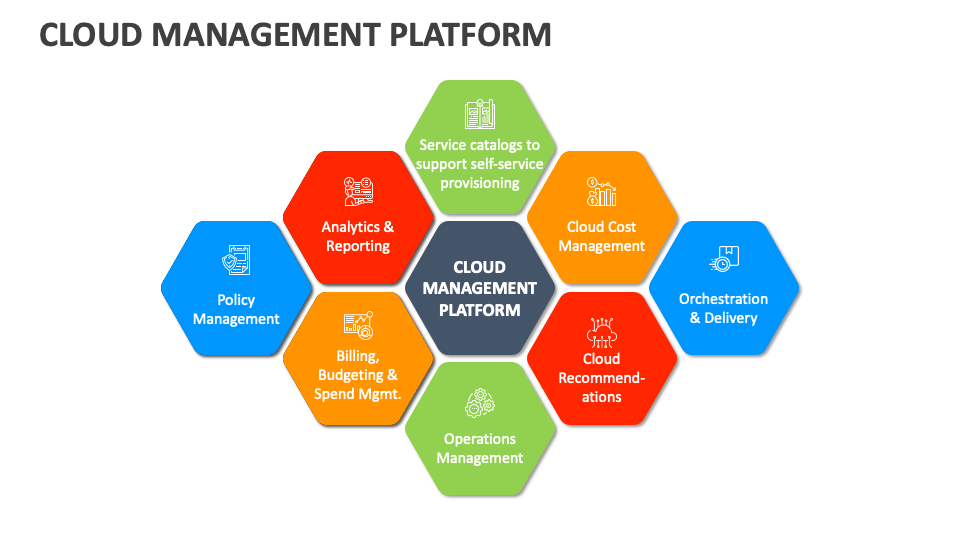
The modern enterprise IT landscape is no longer defined by a single destination—public cloud or private data center—but by a dynamic, distributed reality known as hybrid cloud. This architecture, which seamlessly integrates on-premises infrastructure with private and public cloud services, offers unparalleled flexibility. However, it also introduces profound complexity, creating operational silos, inconsistent security policies, and spiraling, unpredictable costs. In response to this challenge, a critical class of software has emerged: the hybrid cloud management platform (HCMP). These platforms are the central nervous system for the heterogeneous modern enterprise, providing a unified control plane to manage, secure, and optimize resources across any environment. This comprehensive guide delves into the core functionalities, key benefits, leading vendor solutions, and strategic implementation framework for these essential platforms, providing a roadmap for achieving true cloud operational maturity.
A. The Hybrid Imperative: Why Centralized Management is Non-Negotiable
Before exploring the solutions, one must understand the scale of the problem that hybrid cloud management platforms are designed to solve.
A. The Operational Chaos of Disconnected Environments:
Without a unified platform, IT teams are forced to juggle multiple, disconnected tools and interfaces.
-
Multiple Admin Consoles: Teams must log into vCenter for the private cloud, the AWS Management Console for one workload, the Azure Portal for another, and a separate tool for monitoring. This context-switching is inefficient and error-prone.
-
Inconsistent Policies: Ensuring a firewall rule or a backup policy is applied consistently across AWS VPCs, Azure resource groups, and on-premises VMware clusters is a manual, arduous task.
-
Fragmented Visibility: Gaining a holistic view of performance, security threats, or cost attribution across the entire IT estate is nearly impossible when data is locked in separate silos.
B. The Financial Black Hole of Unoptimized Spending:
The pay-as-you-go model of the public cloud, while flexible, can lead to significant waste without centralized governance.
-
Unchecked Resource Sprawl: Developers can easily provision expensive virtual machines and forget to decommission them, leading to “zombie” resources that accumulate costs.
-
Inconsistent Pricing Models: Managing Reserved Instances (AWS), Savings Plans (AWS/Azure), and Committed Use Discounts (GCP) across multiple clouds without a single view is a complex accounting nightmare.
-
Lack of Cross-Cloud Cost Comparison: It is difficult to determine whether it is more cost-effective to run a specific workload on-premises, in Azure, or in AWS without a platform that can normalize and compare pricing.
C. The Security and Compliance Nightmare:
A distributed attack surface requires a centralized security posture.
-
Configuration Drift: A securely configured VM in Azure might have its security group inadvertently changed, creating a vulnerability that is hard to detect without continuous, cross-cloud monitoring.
-
Compliance Reporting: Demonstrating compliance with regulations like HIPAA or GDPR requires proving that controls are in place everywhere—across every cloud and data center. Manually aggregating this evidence is inefficient and risky.

B. Core Capabilities of a Modern Hybrid Cloud Management Platform
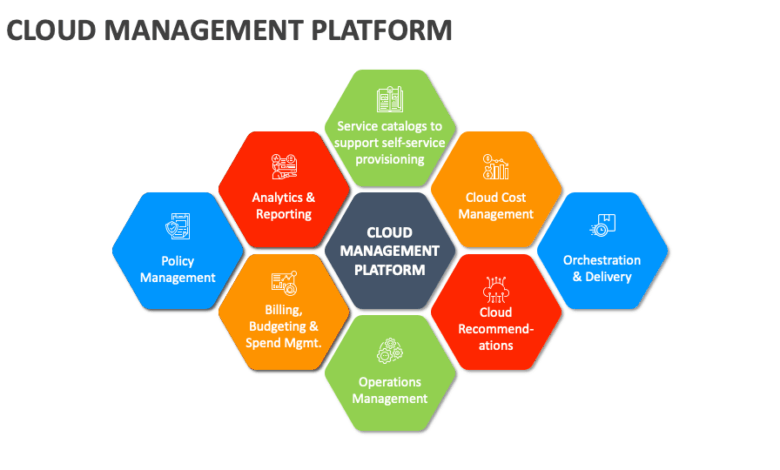
A robust HCMP is more than a single tool; it is an integrated suite of services that deliver a cohesive management experience.
A. Unified Visibility and Monitoring:
This is the foundational capability, providing a single pane of glass.
-
Topology Mapping: Automatically discovers and maps all resources—VMs, containers, storage, networking—across environments, visualizing their dependencies.
-
Performance Dashboards: Aggregates metrics (CPU, memory, disk I/O, network latency) from diverse sources into unified health and performance dashboards.
-
Log Aggregation and Analysis: Collects and correlates log data from on-premises systems and cloud-native services to provide comprehensive operational and security insights.
B. Governance, Security, and Compliance Automation:
HCMPs enforce order and security at scale through policy-driven automation.
-
Policy-as-Code: Allows administrators to define security, cost, and operational policies in code (e.g., using YAML). Examples include: “No storage buckets can be publicly accessible,” or “All VMs must be tagged with an owner.”
-
Drift Detection and Remediation: The platform continuously monitors for configuration changes that violate policy and can automatically revert them to a compliant state.
-
Identity and Access Management (IAM) Bridging: Provides a centralized way to manage user roles and permissions across different cloud IAM systems, though it often federates with them rather than replacing them.
C. Cost Management and Resource Optimization (FinOps):
This capability is critical for controlling the hybrid cloud budget.
-
Cost Allocation and Showback/Chargeback: Accurately attributes cloud spend to specific departments, projects, or cost centers using tags and metadata.
-
Resource Right-Sizing Recommendations: Analyzes utilization metrics and recommends resizing or terminating underused instances to save money.
-
Commitment Management: Tracks the utilization of reserved instances and savings plans across clouds, ensuring organizations maximize their discounts and avoid wasted commitments.
D. Automated Provisioning and Orchestration:
HCMPs enable self-service and accelerate application deployment.
-
Service Catalog: Provides a curated menu of pre-approved, compliant infrastructure stacks (e.g., a “secure web server” or “data science environment”) that developers can deploy with a single click.
-
Infrastructure as Code (IaC) Integration: Natively integrates with tools like Terraform and Ansible to standardize and automate the deployment and lifecycle management of resources everywhere.
-
Application Lifecycle Management: Manages the entire lifecycle of an application, from deployment and scaling to updates and decommissioning, across different environments.
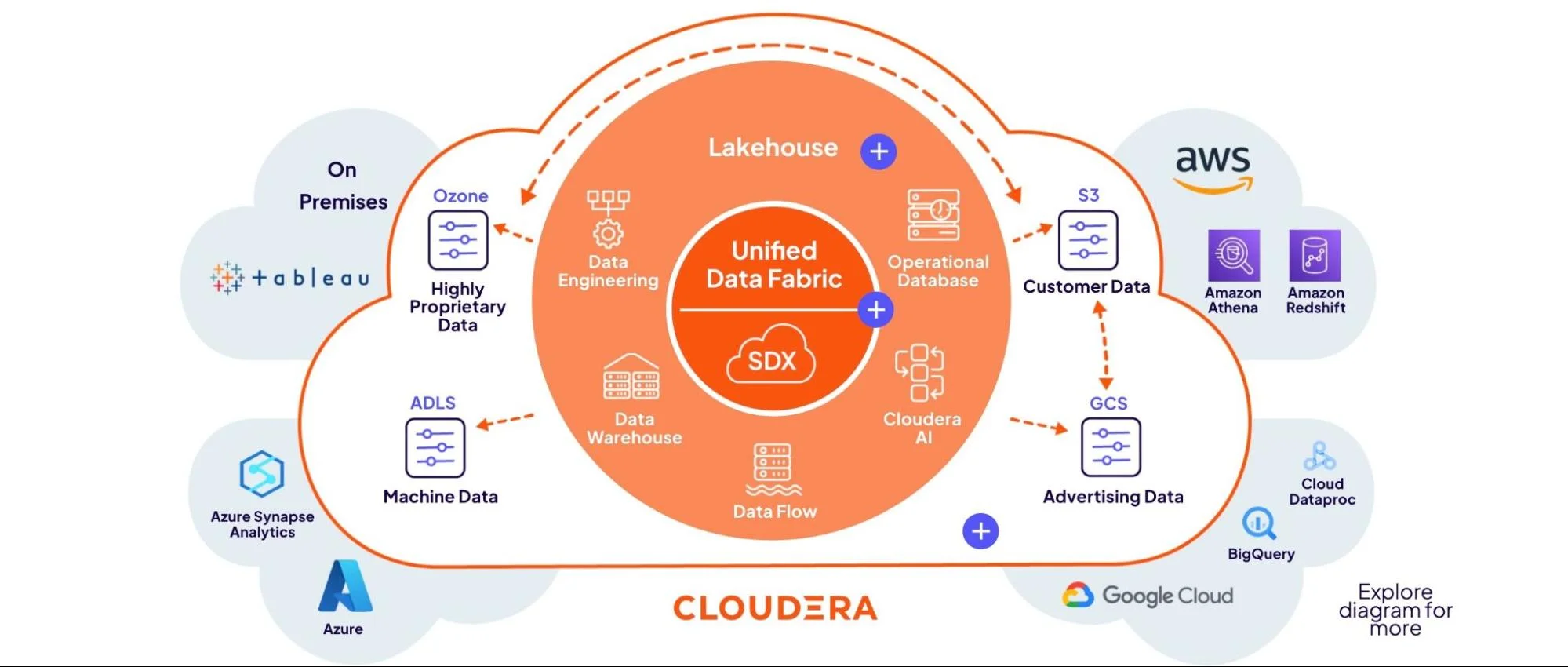
C. Leading Platform Architectures: A Vendor Landscape Analysis
The market offers several distinct approaches to hybrid cloud management, each with its own strengths and strategic focus.
A. Cloud Provider Native Platforms:
These are extensions of a major public cloud’s control plane into on-premises environments.
-
Microsoft Azure Arc: The most ambitious native platform. It “projects” on-premises servers, Kubernetes clusters, and even other clouds into the Azure Resource Manager, allowing them to be managed as if they were native Azure resources. This enables using Azure policies, security center, and resource graphs for non-Azure infrastructure.
-
Google Anthos: A Kubernetes-centric platform that delivers a consistent development and operations experience across environments using managed GKE (Google Kubernetes Engine) clusters. It is the strongest choice for enterprises fully committed to a containerized, modern application architecture.
-
AWS Outposts: A more physically integrated solution where AWS delivers pre-configured, mini-AWS racks to your data center. While excellent for low-latency needs, its management model is more about extending the AWS region than managing a truly heterogeneous environment that includes, for example, VMware or Azure.
B. Infrastructure Vendor Platforms:
These platforms evolved from the virtualization and private cloud world.
-
VMware vSphere with Tanzu and Aria Suite: VMware’s strategy is to make its vSphere hypervisor the consistent substrate for both traditional VMs and modern Kubernetes workloads. The VMware Aria suite (formerly vRealize) provides robust cost management, automation, and lifecycle management across vSphere, public clouds, and Kubernetes.
-
Nutanix Xi Beam: Focused heavily on cost governance and security compliance across AWS, Azure, GCP, and Nutanix’s own AHV private cloud, with a strong emphasis on automation and policy-based management.
C. Third-Party and Open Source Agnostic Platforms:
These tools are designed from the ground up to be cloud-agnostic.
-
HashiCorp Terraform Cloud: While primarily an IaC tool, its enterprise version provides governance, policy-as-code (via Sentinel), and a private module registry that delivers a powerful management layer for hybrid infrastructure defined as code.
-
Flexera Cloud Management Platform (formerly RightScale): A mature, third-party platform known for its strong cost optimization and governance capabilities across a wide array of clouds and technologies.
-
Red Hat Ansible Automation Platform: While an automation tool, its ability to create a single, consistent automation language for configuring systems across any environment makes it a de facto management platform for many enterprises.
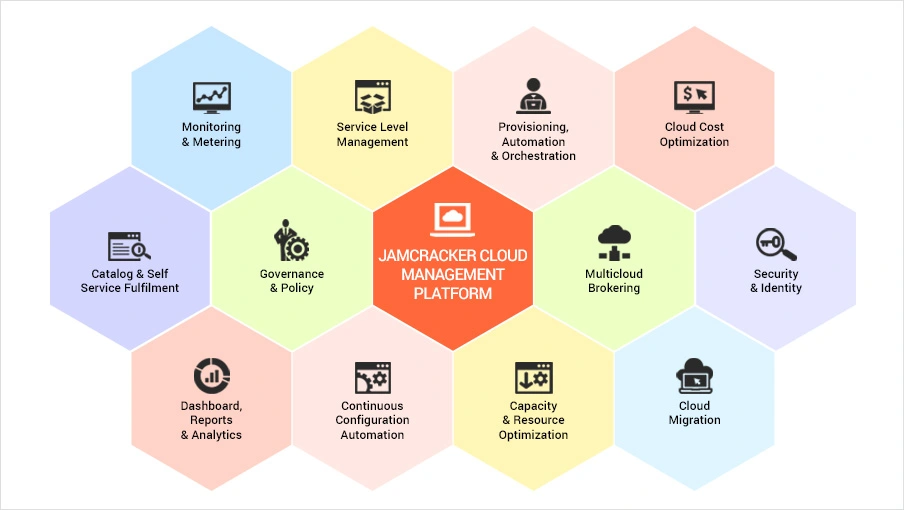
D. The Strategic Implementation Framework
Successfully deploying an HCMP is a strategic initiative, not just a technical installation. It requires a phased approach.
A. Phase 1: Assessment and Discovery:
-
Conduct a comprehensive asset inventory across all cloud and data center environments.
-
Establish a cross-functional “Cloud Center of Excellence” (CCoE) including stakeholders from IT operations, security, finance, and application development.
-
Define clear pain points and desired outcomes (e.g., “Reduce unplanned cloud spend by 25%,” “Achieve consistent security baseline across all workloads”).
B. Phase 2: Platform Selection and Proof-of-Concept:
-
Evaluate platforms against your key criteria, weighing factors like existing vendor relationships, application architecture (VM vs. container-centric), and primary goals (cost vs. security vs. agility).
-
Run a limited-scope proof-of-concept with 2-3 shortlisted vendors to validate functionality and usability in your environment.
-
Develop a total cost of ownership (TCO) model for the platform itself, including licensing, training, and operational overhead.
C. Phase 3: Foundational Governance and Policy Design:
-
Implement a standardized tagging strategy; this is the single most important prerequisite for effective management.
-
Define and codify the first set of policies, starting with “low-hanging fruit” like cost control (e.g., mandate instance shutdowns after hours) and critical security rules (e.g., block public SSH access).
-
Establish the service catalog with 2-3 of the most commonly requested infrastructure templates.
D. Phase 4: Gradual Rollout and Organizational Change:
-
Onboard a pilot group of applications and development teams, gather feedback, and refine processes.
-
Invest heavily in training and documentation to empower teams to use the new platform effectively.
-
Expand the scope of management gradually, adding more sophisticated policies, automated remediation, and advanced cost optimization features.
E. The Future Trajectory: AI and the Autonomous Cloud
The evolution of HCMPs is moving towards greater intelligence and autonomy.
A. AI-Ops and Predictive Management:
Platforms will increasingly use machine learning to move from monitoring to predicting. They will forecast performance bottlenecks, predict future costs, and preemptively recommend actions to prevent issues before they impact the business.
B. The Rise of Kubernetes as the Universal Control Plane:
With projects like Azure Arc and Google Anthos, Kubernetes is emerging as the common abstraction layer for managing not just containers, but also virtual machines and serverless functions across all environments.
C. Deep Integration with DevOps and GitOps Workflows:
The management platform will become an invisible, automated part of the software development lifecycle. Infrastructure changes defined in a Git repository will be automatically validated against policy, deployed, and monitored by the HCMP without human intervention.
Conclusion: From Complexity to Competitive Advantage
Hybrid cloud is the undeniable present and future of enterprise IT. The complexity it introduces is not a temporary hurdle but a permanent feature of the digital landscape. A hybrid cloud management platform is the essential tool for transforming this complexity from a debilitating operational burden into a source of strategic agility, resilience, and cost efficiency. By providing unified governance, automated operations, and holistic financial control, an HCMP empowers organizations to execute a true cloud-smart strategy—deploying each workload in the optimal environment based on its performance, security, and cost requirements. The journey to effective hybrid cloud management requires careful planning, cross-organizational collaboration, and a commitment to a new operational model. However, the reward is an IT infrastructure that is not just managed, but truly mastered, becoming a powerful engine for innovation and business growth.