A. Introduction: The Foundational Choice in Modern Computing
In the journey of deploying applications, websites, or services, one of the most critical and foundational decisions an organization or developer must make is selecting the right server infrastructure. This choice sits at the core of performance, security, scalability, and cost-efficiency. The digital landscape is predominantly dominated by two powerful paradigms: the raw, unadulterated power of Bare Metal Servers and the agile, flexible efficiency of Virtual Servers. Often presented as a direct competition, understanding the nuances between them is not about declaring an outright winner, but about identifying the perfect tool for a specific job. This in-depth guide will dissect both infrastructures, exploring their architectures, advantages, limitations, and ideal use cases, empowering you to make a strategically sound decision for your unique technological requirements.
The evolution from physical on-premises servers to sophisticated cloud-based solutions has been revolutionary. While shared hosting introduced affordability, its limitations soon became apparent for demanding workloads. This led to the development of two advanced hosting models that cater to performance and isolation needs: one that provides direct access to hardware (Bare Metal) and another that maximizes hardware utilization through abstraction (Virtual). We will delve deep into both to illuminate the path forward for your projects.
B. Deconstructing the Architectures: A Technical Deep Dive
To truly appreciate the differences, one must first understand the fundamental architectural principles that define each server type.
A. The Anatomy of a Bare Metal Server
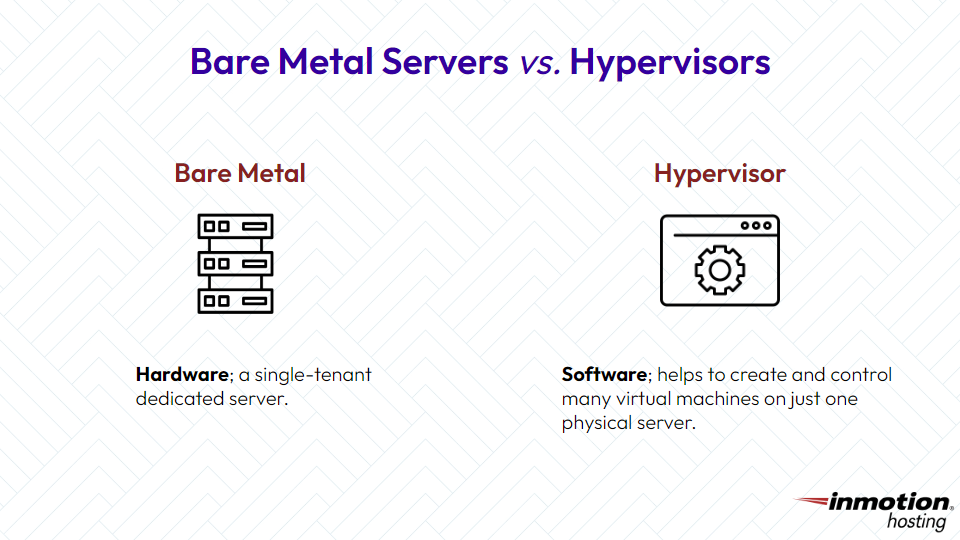
A Bare Metal Server is, in its purest form, a single-tenant physical server. The term “bare metal” evocatively describes the user’s direct access to the underlying hardware, with no software layer or virtualization in between. When you provision a bare metal server, you are leasing an entire physical machine from a provider, and you have exclusive rights to all its components.
-
Hardware Isolation: Your instance is not sharing the CPU, RAM, network controllers, or storage drives with any other customer. This isolation is the bedrock of its performance and security profile.
-
The Software Stack: You begin with a blank slate. The provider typically offers a mechanism to install an operating system (OS) of your choice directly onto the server’s hardware. From that point on, you have full root or administrator access to configure the OS, install applications, and manage the server as if it were sitting in your own data center.
-
Performance Lineage: Because there is no hypervisor layer to introduce overhead, every cycle of CPU processing power, every megabyte of RAM, and every I/O operation from the storage drives is dedicated solely to your workloads. This results in consistent, predictable, and high-performance computing.
B. The Architecture of a Virtual Server (VPS)
A Virtual Server, also widely known as a Virtual Private Server (VPS), operates on a fundamentally different principle: abstraction through virtualization. A single, powerful physical server is partitioned into multiple isolated virtual environments.
-
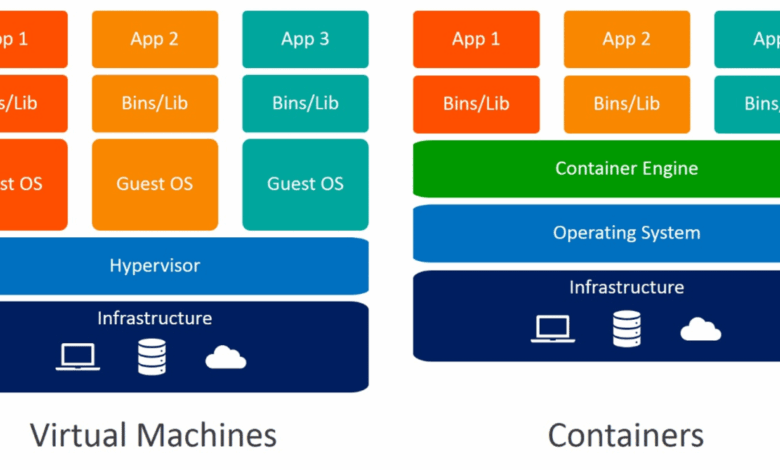
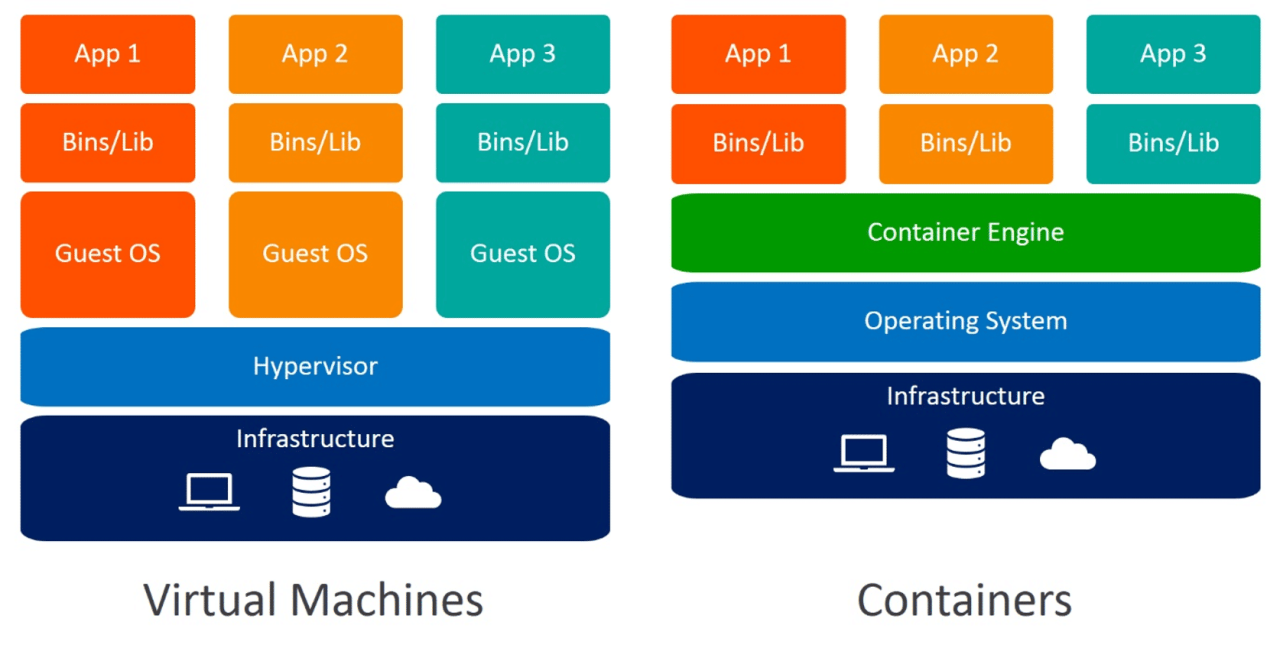
The Role of the Hypervisor: The key enabling technology is a software layer called a hypervisor (e.g., VMware ESXi, KVM, Microsoft Hyper-V). The hypervisor runs directly on the physical server’s hardware and is responsible for creating, managing, and running the virtual machines (VMs). It abstracts the physical resources—CPUs, memory, storage, and networking—and pools them together.
-
Resource Allocation and Slicing: This pooled resource is then allocated to the various virtual servers. Each VPS receives a guaranteed allotment of vCPUs (virtual CPUs), a segment of RAM, and a portion of the storage. From the perspective of the VPS user, their server appears and behaves like a dedicated physical machine with its own operating system.
-
The “Noisy Neighbor” Concept: While resource allocation is guaranteed, the underlying hardware is still shared. In rare cases, if one virtual server on the same physical host experiences an extreme, unexpected spike in resource consumption, it theoretically can impact the performance of others, a phenomenon often referred to as the “noisy neighbor” effect. However, modern hypervisors and robust cloud platforms have sophisticated mechanisms to minimize this.
C. A Head-to-Head Comparative Analysis
To make an informed choice, a direct comparison across key operational parameters is essential.
A. Performance and Raw Processing Power
-
Bare Metal: Unquestionably superior for raw, consistent performance. It is the definitive choice for latency-sensitive applications, high-performance computing (HPC), and large databases because it eliminates the “virtualization tax” or overhead introduced by the hypervisor. I/O-intensive applications, in particular, benefit immensely from direct access to NVMe SSDs or hardware RAID controllers.
-
Virtual Servers: Offer excellent performance for the vast majority of workloads. However, there is a minor performance penalty due to the hypervisor’s translation of instructions between the virtual hardware and the physical hardware. For web servers, medium-traffic databases, and development environments, this overhead is often negligible and a worthy trade-off for the gained flexibility.
B. Security and Compliance Considerations
-
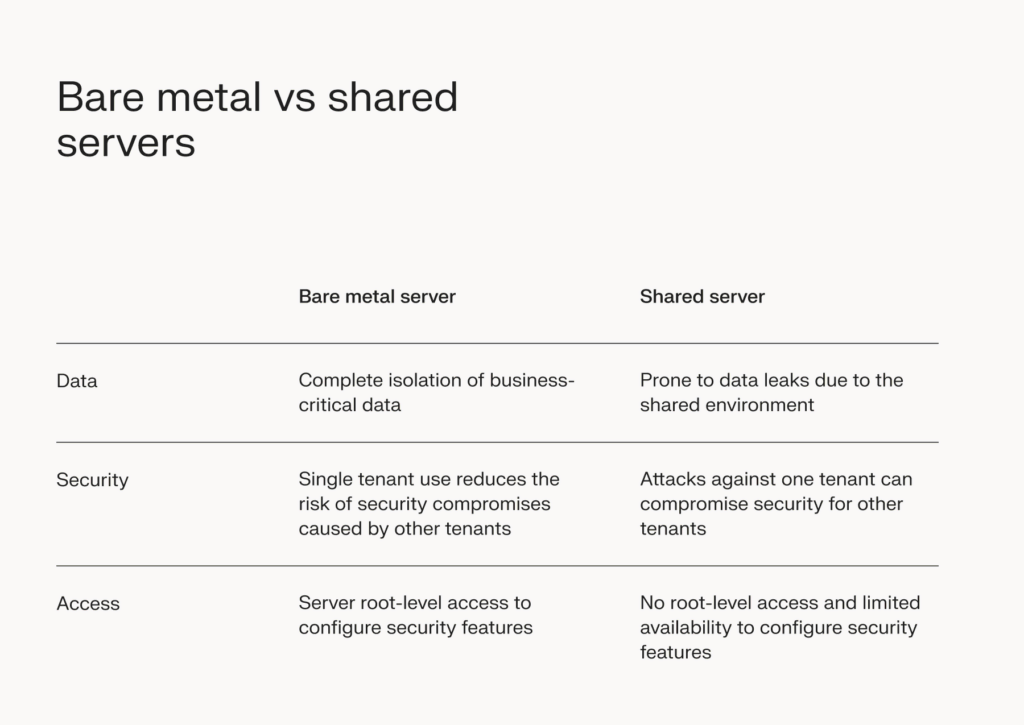
Bare Metal: Provides the highest level of hardware-level security by default. The single-tenant nature means there is no risk of cross-contamination from other tenants at the hardware or hypervisor level. This makes it ideal for organizations with stringent regulatory compliance needs (e.g., HIPAA, PCI DSS, GDPR) that require dedicated, auditable hardware.
-
Virtual Servers: Security is generally very robust, with strong isolation between VMs enforced by the hypervisor. The risk surface is slightly larger, however, as a vulnerability in the hypervisor itself could, in theory, be exploited to compromise VMs. For most standard business applications, the security of a well-configured VPS is more than sufficient.
C. Scalability and Deployment Agility
-
Bare Metal: Scalability is vertical (scaling up) and is a manual process. To upgrade the CPU or RAM, you typically need to provision a new, more powerful server and migrate your data, which can involve significant downtime. Deployment times are also longer, ranging from minutes to a few hours, as the provider’s system must configure the physical hardware.
-
Virtual Servers: The champion of agility. Scaling is incredibly fast and flexible. You can often vertically scale (resize) a VPS with a simple reboot, which takes minutes. Furthermore, you can leverage horizontal scaling (scaling out) by deploying multiple identical VMs and distributing load among them. New virtual servers can be deployed from a template in seconds, enabling rapid development and testing cycles.
D. Cost Structure and Economic Efficiency
-
Bare Metal: Follows a Capital Expenditure (CapEx)-like model, even in the cloud. You are reserving and paying for an entire physical machine, typically on a monthly or hourly basis. This leads to a higher absolute cost, making it less suitable for projects with limited budgets or unpredictable resource needs.
-
Virtual Servers: Operate on an Operational Expenditure (OpEx) model. You are only paying for the slice of resources you use. This results in a much lower entry cost and superior cost-efficiency for variable workloads. The ability to quickly resize or destroy VMs prevents you from paying for unused capacity.
E. Customization and Control
-
Bare Metal: Offers unparalleled control. You can specify and customize hardware components, choose specific network interface cards (NICs), install any operating system (including exotic or legacy ones), and even configure the BIOS settings. This level of granularity is essential for specialized workloads.
-
Virtual Servers: Customization is limited to the virtualized hardware presented by the hypervisor. You cannot change the underlying physical CPU model or NIC. While you can choose from a wide range of supported guest operating systems, your options are confined to what the provider’s platform supports.
D. Ideal Use Cases: Matching the Server to the Task
Understanding the theory is good; knowing where to apply it is better.
A. When to Choose a Bare Metal Server
Bare metal is not for everyone, but for specific tasks, it is irreplaceable.
-
High-Performance Computing (HPC) and Scientific Modeling: Applications like financial risk modeling, genomic sequencing, and complex fluid dynamics simulations require every ounce of CPU and RAM without interference.
-
Massive, I/O-Intensive Databases: Large-scale Oracle, SQL Server, or NoSQL databases that handle millions of transactions per minute benefit drastically from direct, low-latency access to NVMe storage and high-throughput networking.
-
Big Data Analytics Platforms: Infrastructure for platforms like Hadoop or Spark clusters often runs best on bare metal to process vast datasets efficiently.
-
GPU-Intensive Workloads: Machine learning training, 3D rendering farms, and video encoding leverage dedicated GPU cards (from NVIDIA or AMD) that perform best when accessed directly by the application.
-
Legacy Applications and Strict Compliance: Applications requiring specific, non-virtualized hardware or environments bound by strict regulatory mandates for data isolation.
B. When to Choose a Virtual Server (VPS)
Virtual servers are the workhorses of the modern internet, perfect for a wide array of common scenarios.
-
Web Hosting and E-commerce Platforms: The vast majority of websites, including those running on WordPress, Magento, or Drupal, run flawlessly on VPS hosting, balancing performance and cost.
-
Application and Development Environments: Virtual servers are ideal for development, staging, and testing environments due to their rapid deployment and easy disposal.
-
Small to Medium-Sized Business Applications: CRM systems, ERP software, and file servers that have predictable resource needs are perfectly suited for a VPS.
-
Microservices and Containerized Applications: The lightweight and ephemeral nature of containers (Docker, Kubernetes) aligns perfectly with the agile nature of virtual servers.
-
Disaster Recovery and Backup Solutions: The ability to quickly spin up a virtual server from a backup image makes VPS an excellent and cost-effective target for disaster recovery plans.
E. The Emergence of a Hybrid and Modern Alternatives
The industry is not strictly binary. Modern solutions have emerged that blend concepts or offer new abstractions.
A. The Hybrid Cloud Model: The Best of Both Worlds
Many enterprises adopt a hybrid strategy. They might run their core, performance-sensitive database on a bare metal server for maximum throughput while hosting their fleet of web application servers on virtual servers for easy scaling. This approach allows them to optimize both cost and performance by placing each workload on its ideal platform.
B. Bare Metal as a Service (BMaaS)
Cloud providers like IBM Cloud, Oracle Cloud, and AWS have integrated bare metal servers into their cloud ecosystems. This allows you to provision a bare metal server through the same API and interface as your virtual servers, often with hourly billing. This combines the raw power of bare metal with the operational agility of the cloud.
C. Containers and Serverless Computing
It’s also important to view this choice in a broader context.
-
Containers: Technologies like Docker abstract the application layer from the OS. They can run consistently on both bare metal and virtual servers, though they are most commonly deployed on VMs for isolation and management ease.
-
Serverless (FaaS): This model abstracts the server away entirely. You simply deploy code, and the cloud provider manages the underlying infrastructure (which is often a complex mix of VMs and containers). This is a step beyond virtualization in terms of abstraction and operational simplicity.
F. A Strategic Decision Framework: How to Choose
Making the final decision requires a structured evaluation of your project’s needs. Ask yourself these critical questions:
A. What is My Performance Benchmark?
-
Do I need the absolute lowest latency and highest I/O throughput? → Bare Metal.
-
Is my performance requirement “very good” and consistent with standard cloud offerings? → Virtual Server.
B. What is My Growth and Scalability Trajectory?
-
Are my resource needs stable and predictable for the foreseeable future? → Bare Metal.
-
Do I expect rapid, unpredictable growth or need to scale up and down frequently? → Virtual Server.
C. What is My Security and Compliance Posture?
-
Do I have a mandatory requirement for dedicated, auditable hardware? → Bare Metal.
-
Are standard cloud security controls and VM isolation sufficient for my data? → Virtual Server.
D. What is My Budget and Cost Sensitivity?
-
Is my budget substantial, and is performance the primary driver of ROI? → Bare Metal.
-
Am I budget-conscious and seeking the best value and efficiency? → Virtual Server.
E. What is My In-House Technical Expertise?
-
Do I have a skilled sysadmin team to manage the entire OS and hardware stack? → Bare Metal.
-
Do I prefer a more managed environment or need to move quickly with less overhead? → Virtual Server.
G. Conclusion: An Ecosystem of Coexistence, Not Conflict
The debate between Bare Metal and Virtual Servers is not a battle for supremacy but a testament to the diverse needs of the digital world. Bare Metal Servers stand as the undisputed champion of raw power, consistency, and security, serving mission-critical, high-performance workloads. Virtual Servers, on the other hand, are the epitome of agility, efficiency, and scalability, powering the vast majority of the internet’s applications and services.
The most sophisticated IT strategies often leverage both, creating a hybrid infrastructure that aligns perfectly with business objectives. By thoroughly assessing your performance requirements, security mandates, growth patterns, and financial constraints against the detailed profiles of each server type, you can move beyond the dilemma and make a confident, strategic choice. In the end, the “best” server is the one that most effectively and efficiently propels your specific project toward success.