Building Sustainable and Efficient Data Centers
In our increasingly digital world, data centers form the unseen bedrock of modern civilization. They power everything from streaming services and social media to global finance and scientific research. However, this digital convenience comes with a significant environmental cost. As the demand for computational power and data storage skyrockets, the energy consumption and carbon footprint of these facilities have come under intense scrutiny. The era of treating energy as an afterthought is over. A new paradigm is emerging, focused on building sustainable, efficient, and future-proof data centers. This comprehensive guide delves into the critical strategies, innovative technologies, and forward-thinking philosophies that are transforming data centers from environmental liabilities into beacons of green technology.
A. The Urgent Imperative: Why Data Center Sustainability is Non-Negotiable
The drive for sustainable data centers is not merely a public relations campaign; it is a strategic necessity driven by a confluence of powerful factors.
A. Soaring Global Energy Consumption and Carbon Emissions:
The global data center ecosystem accounts for a significant and growing portion of the world’s electricity use—estimates range from 1-2%, with some projections showing a potential rise. This consumption translates directly into carbon emissions, especially in regions where the power grid relies on fossil fuels. With the explosion of data-intensive technologies like artificial intelligence, machine learning, and the Internet of Things (IoT), this energy demand is projected to increase exponentially, making efficiency a top priority for the entire industry.
B. Intensifying Regulatory Pressure and Compliance Demands:
Governments and international bodies are implementing stricter environmental regulations. Carbon taxes, emissions trading schemes, and mandatory sustainability reporting frameworks are becoming commonplace. For instance, the European Union’s Corporate Sustainability Reporting Directive (CSRD) requires large companies to disclose their environmental impact, including energy usage from data centers. Proactively adopting green practices is no longer optional for regulatory compliance and avoiding potential fines.
C. The Powerful Influence of Corporate ESG Commitments:
Environmental, Social, and Governance (ESG) criteria are now a critical factor for investors, partners, and customers. A strong sustainability record enhances a company’s brand reputation, attracts ethically-minded investors, and can be a decisive factor in winning contracts with large enterprises that have their own stringent ESG goals. A sustainable data center is a powerful asset in demonstrating a genuine commitment to corporate responsibility.
D. The Compelling Business Case for Operational Cost Savings:
Energy is the single largest operational expense for a typical data center, often constituting over half of the total cost of ownership. Implementing energy-efficient technologies directly translates to lower electricity bills. Investments in sustainability, while sometimes requiring upfront capital, consistently yield a strong return on investment through reduced operational expenditures, making them financially prudent as well as environmentally sound.

B. The Foundational Metric: Understanding and Optimizing Power Usage Effectiveness (PUE)
To manage and improve data center efficiency, the industry relies on a key performance indicator: Power Usage Effectiveness (PUE).
A. Defining PUE: The Gold Standard of Efficiency Measurement:
Introduced by The Green Grid consortium, PUE is a simple ratio. It is calculated by dividing the total amount of energy entering a data center by the energy used specifically by the IT equipment (servers, storage, network switches).
PUE = Total Facility Energy / IT Equipment Energy
The ideal PUE is 1.0, which would indicate that all energy is used for computing, with nothing wasted on support systems. In the real world, a PUE of 1.0 is unattainable, but the closer a facility gets to this number, the more efficient it is.
B. Interpreting PUE Scores and Industry Benchmarks:
A. PUE of 2.0 and Above: This was typical for older, inefficient data centers, where for every watt powering a server, another watt was used for cooling and power distribution.
B. PUE of 1.5 – 1.8: Represents an average, moderately efficient enterprise data center.
C. PUE of 1.2 – 1.4: Indicates a well-designed, highly efficient facility, common among modern cloud providers.
D. PUE of 1.1 – 1.2: Achieved by state-of-the-art data centers using advanced cooling techniques and optimized designs, such as those built by Google and Facebook.
C. A Holistic Strategy for PUE Reduction:
Achieving a low PUE requires a multi-faceted approach focused on reducing the energy consumed by non-IT infrastructure, primarily cooling and power losses.
A. Advanced Cooling Systems: Moving beyond traditional, energy-hungry Computer Room Air Conditioning (CRAC) units.
B. Optimized Power Distribution: Minimizing energy losses as electricity is converted and delivered to the IT racks.
C. IT Load Management: Ensuring that the computing workload itself is run as efficiently as possible.
C. Core Strategies for Achieving Data Center Sustainability
Building a truly sustainable data center requires a holistic approach that addresses energy sourcing, infrastructure efficiency, and IT resource management.
A. Power Sourcing: The Transition to Renewable Energy:
The single most impactful step a data center operator can take is to power their facilities with clean, renewable energy. This directly addresses the carbon footprint at the source.
A. Power Purchase Agreements (PPAs): Data center operators sign long-term contracts to buy electricity directly from a renewable energy developer, such as a new solar or wind farm. This finances the construction of new green energy projects and provides price stability.
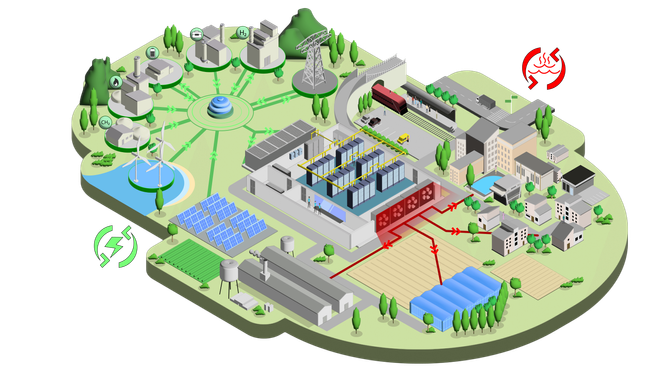
B. On-Site Generation: Installing solar panels, wind turbines, or fuel cells on or near the data center property. While often unable to meet 100% of the demand, on-site generation reduces grid dependency and can provide backup power.
C. Renewable Energy Credits (RECs): Purchasing RECs allows a company to claim the environmental benefits of renewable energy even if they cannot directly source it from their local grid, effectively offsetting their carbon emissions from electricity use.
B. Cooling Innovation: Moving Beyond Traditional Air Conditioning:
Cooling can account for 40% or more of a data center’s total energy use. Revolutionary cooling technologies are at the forefront of sustainability.
A. Liquid Cooling Technologies: This involves submerging server components directly in a non-conductive dielectric fluid or using cold plates in direct contact with hot components. Liquid is far more efficient at capturing heat than air, reducing cooling energy by up to 90%. This is becoming essential for high-density AI and HPC workloads.
B. Free Cooling Architectures: Utilizing the outside environment to cool the facility, drastically reducing the need for mechanical refrigeration.
* Air-Side Economization: Using outside air directly when the temperature and humidity are favorable. Common in climates like the Pacific Northwest.
* Water-Side Economization: Using a cooling tower to create chilled water with the help of cool ambient air.
C. Waste Heat Recycling: Instead of expelling hot air as a waste product, innovative data centers are capturing and repurposing it. This heat can be used to warm nearby offices, residential buildings, greenhouses, or even municipal swimming pools, turning a liability into a community asset.
C. IT Infrastructure and Workload Optimization:
The efficiency of the servers themselves is a critical, though often overlooked, component of sustainability.
A. Server Virtualization and Consolidation: Using hypervisor software to run multiple virtual machines (VMs) on a single physical server. This dramatically increases utilization rates from a typical 5-15% to 80% or higher, reducing the total number of physical servers required, and in turn, the energy, space, and cooling needed.
B. The Shift to Hyperconverged Infrastructure (HCI): HCI combines computing, storage, and networking into a single, software-defined system. This simplifies management and typically leads to higher resource utilization and lower energy consumption compared to traditional siloed architectures.
C. Hardware Refresh Cycles and Right-Sizing: Older servers are significantly less efficient than modern ones. Implementing a disciplined refresh cycle (e.g., every 3-4 years) ensures access to the latest energy-efficient processors and power supplies. Furthermore, right-sizing IT equipment to match the actual workload prevents over-provisioning and wasted energy.
D. Sustainable Design, Construction, and Location:
Sustainability begins before the first server is installed.
A. Strategic Geographic Location: Building data centers in regions with a naturally cool climate (like Iceland or Scandinavia) enables extensive use of free cooling. Locations with abundant and cheap renewable energy sources (like hydroelectric-rich Quebec or sunny Arizona) are also highly advantageous.
B. Green Building Certifications: Pursuing certifications like LEED (Leadership in Energy and Environmental Design) ensures that the entire facility—from its construction materials to its water usage and energy systems—meets high environmental standards.
C. Water Usage Effectiveness (WUE): While PUE measures energy, WUE is a critical metric for water consumption. Sustainable data centers are minimizing their use of potable water for cooling, often using recycled water or dry cooling systems in water-stressed regions.

D. The Circular Economy: Tackling Electronic Waste
A sustainable data center must address its entire lifecycle, including the problem of electronic waste (e-waste).
A. The Growing E-Waste Crisis:
Data centers have a finite lifespan for their hardware. The constant cycle of server refreshes generates a significant amount of e-waste, which is often toxic and difficult to recycle responsibly.
B. Implementing Circular Economy Principles:
A. Asset Lifecycle Extension: Before decommissioning, operators can repurpose older servers for less critical workloads or disassemble them for functional parts to be used as spares.
B. Refurbishment and Resale: Partnering with IT asset disposition (ITAD) companies to securely wipe data, refurbish equipment, and sell it on the secondary market, giving hardware a second life.
C. Design for Disassembly and Recycling: Working with hardware vendors that design products for easy disassembly, using standardized components and labeling materials for efficient recycling at end-of-life.
D. Responsible Recycling: Ensuring that any non-reusable equipment is sent to certified e-waste recyclers who adhere to the highest environmental and data security standards, preventing toxic materials from entering landfills.
E. Leading by Example: Case Studies in Sustainability
Several industry leaders have demonstrated what is possible with a committed, innovative approach to green data centers.
A. Google’s 24/7 Carbon-Free Energy Strategy:
Google has moved beyond simply matching its annual energy use with renewables. Its ambitious goal is to run its data centers on carbon-free energy, every hour of every day, by 2030. This means sourcing power from a mix of renewables and other carbon-free sources (like green hydrogen or advanced nuclear) that can supply power even when the sun isn’t shining or the wind isn’t blowing.
B. Microsoft’s Underwater Data Center Project Natick:
This groundbreaking experiment involved deploying a sealed data center capsule on the seafloor off the coast of Scotland. The project demonstrated incredible efficiency, with a PUE of 1.07, achieved by leveraging the consistent, cold ocean temperatures for cooling. It also explored the potential for zero-water-consumption data centers and rapid deployment.
C. Equinix’s Focus on Green Building and Long-Term Efficiency:
As a leading global colocation provider, Equinix has made significant investments in energy efficiency across its massive portfolio. The company has achieved high LEED certifications for many of its facilities and is a major purchaser of renewable energy through long-term PPAs, showcasing how large-scale, multi-tenant data centers can operate sustainably.
F. The Future Horizon: Emerging Technologies and Trends
The innovation in data center sustainability is accelerating, with several promising technologies on the horizon.
A. Artificial Intelligence for Data Center Management:
AI and machine learning algorithms are being deployed to optimize data center operations in real-time. These AI systems can analyze vast amounts of data from sensors to predict cooling demands, optimize airflow, identify inefficient servers, and automate energy-saving adjustments, pushing efficiency beyond human-managed capabilities.
B. The Advent of Advanced Nuclear Power:
Small Modular Reactors (SMRs) and even smaller Microreactors offer the potential for a reliable, high-density, carbon-free power source located directly adjacent to large data center campuses. While still in developmental and regulatory stages, nuclear power could provide the always-on baseload power needed to achieve true 24/7 carbon-free operations.
C. Sustainable Hardware and Chip Design:
The semiconductor industry is also focusing on sustainability. Chip manufacturers are designing processors with performance-per-watt as a primary metric. New architectures, like ARM-based server CPUs, are challenging traditional x86 designs by offering comparable performance with significantly lower power consumption.
D. The Rise of Quantum Computing’s Uncertain Impact:
While still in its infancy, quantum computing poses a fascinating sustainability question. A fault-tolerant quantum computer could solve certain complex problems with a fraction of the energy required by today’s most powerful supercomputers. However, the supporting infrastructure for quantum machines (extreme cooling to near absolute zero) is itself highly energy-intensive. Its net environmental impact remains a critical area of future study.
Conclusion: Forging a Sustainable Digital Future
The journey toward fully sustainable data centers is not a simple destination but a continuous process of innovation, investment, and commitment. It requires a fundamental shift in mindset—from viewing data centers as mere warehouses for servers to seeing them as dynamic, integrated ecosystems that must exist in harmony with our planet’s resources. By aggressively pursuing renewable energy, pioneering revolutionary cooling techniques, optimizing IT workloads, and embracing circular economy principles, the industry can decouple its rapid growth from its environmental impact. The task is monumental, but the imperative is clear. Building the sustainable data centers of tomorrow is not just an IT challenge; it is a prerequisite for a viable, prosperous, and truly digital future for all.