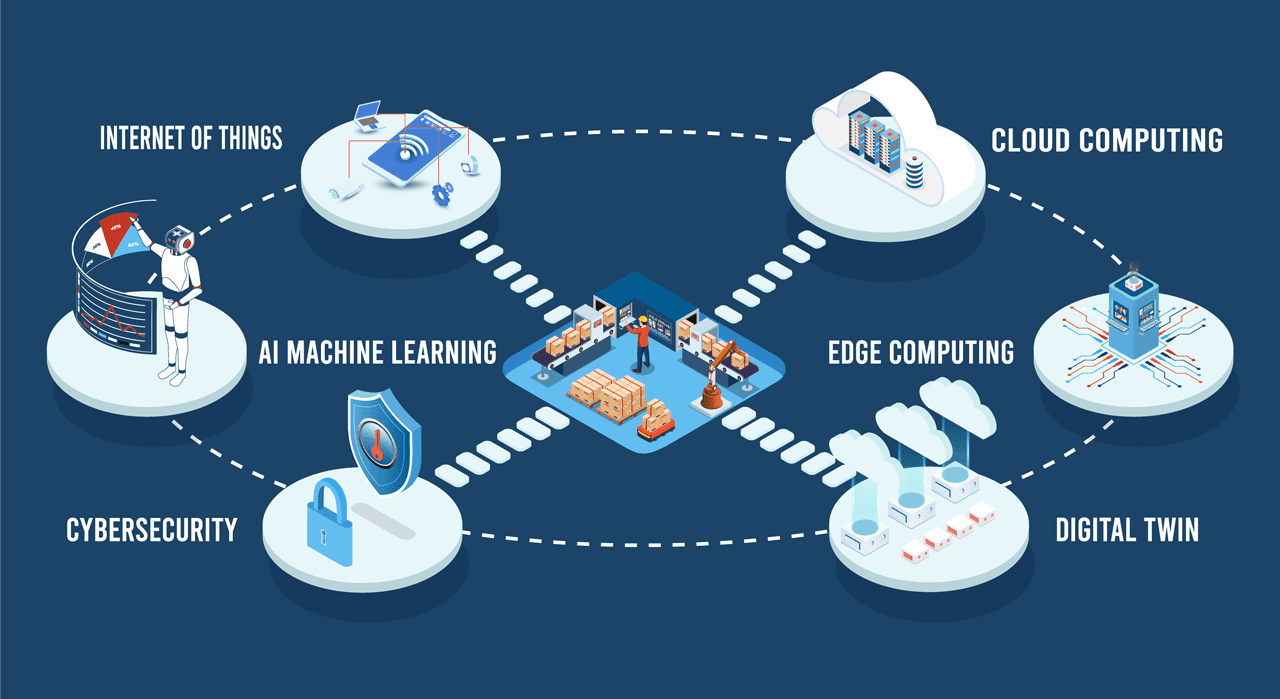
Edge Computing Transforms Modern Business Operations
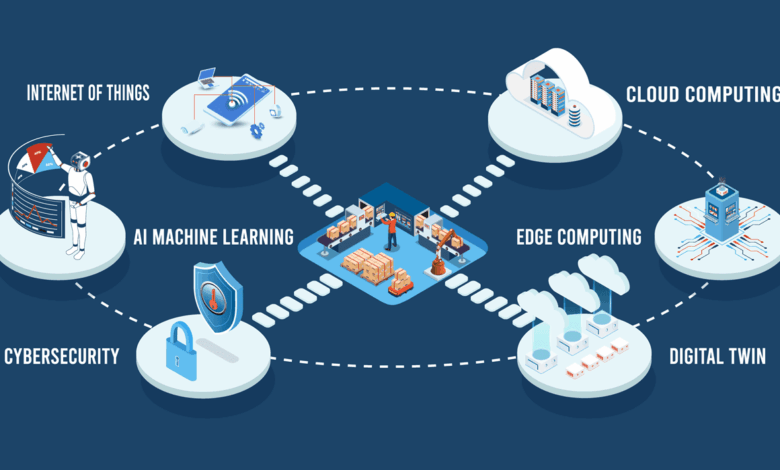
The digital landscape is undergoing a seismic shift, moving beyond the centralized paradigm of cloud computing to a more distributed, intelligent, and immediate framework. This transformative movement is known as edge computing, and it is fundamentally reshaping how businesses process data, make decisions, and deliver value. While the cloud remains a powerful tool for large-scale data storage and complex analytics, a new architectural model is essential to handle the explosion of data from Internet of Things (IoT) devices, the demand for real-time responses, and the need for robust data sovereignty. This in-depth analysis explores the edge computing revolution, detailing its core principles, the compelling drivers behind its adoption, its transformative impact across key industries, the challenges of implementation, and its synergistic future with cloud technologies.
A. The Paradigm Shift: From Cloud-Centric to Edge-Intelligent
To understand the significance of edge computing, one must first grasp the limitations of a purely cloud-based model.
A. The Traditional Cloud Computing Model:
For over a decade, the dominant model has been to send data from endpoints—like sensors, cameras, and user devices—to a centralized cloud data center for processing. After analysis in the cloud, instructions are sent back to the device. This “data in, insight out” loop works well for many applications but introduces a critical factor: latency.
B. The Critical Problem of Latency:
Latency is the delay between a command and a response. Transmitting data hundreds or thousands of miles to a cloud server and back takes time, often hundreds of milliseconds. For numerous modern applications, this delay is unacceptable. A self-driving car cannot wait for a cloud server to tell it to brake for an obstacle. A surgeon using an augmented reality display for a remote procedure cannot afford any lag. This latency bottleneck is a primary catalyst for the edge revolution.
C. Defining the Edge: Computation at the Source:
Edge computing is a distributed computing framework that brings enterprise applications closer to data sources such as IoT devices or local edge servers. This proximity to data at its source can deliver strong business benefits, including faster insights, improved response times, and better bandwidth availability. In essence, the “edge” is any computing resource located between the data source and the cloud. This could be:
-
A small server in a retail store.
-
A ruggedized computer on an oil rig.
-
A processing unit within a smartphone or a camera.
-
A micro data center at a cellular base station.
D. The Conceptual Shift: From Data Transit to Immediate Insight:
The core philosophy of edge computing is to process data where it is generated. Instead of spending bandwidth and time sending vast streams of raw data to the cloud, the edge device or server analyzes the data locally. It only sends valuable, aggregated insights or exception reports to the cloud. This transforms the role of the device from a simple data collector to an intelligent node capable of making autonomous decisions.

B. The Core Drivers: Why Businesses Are Racing to the Edge
The move towards edge computing is not an arbitrary trend; it is a strategic response to several powerful technological and economic forces.
A. The Exponential Growth of Data and Network Congestion:
The volume of data generated by connected devices is staggering. A single autonomous vehicle can generate over 20 terabytes of data every day. Transmitting this deluge of raw data to the cloud would overwhelm network bandwidth and become prohibitively expensive. Edge computing acts as a filter, processing data locally and only sending what is necessary to the cloud, thus alleviating network congestion and reducing data transfer costs.
B. The Non-Negotiable Demand for Real-Time Processing:
Many modern applications require instantaneous action. This is measured in milliseconds.
-
Industrial Robotics: Robots on an assembly line need to coordinate their movements in real-time to avoid collisions and maintain efficiency.
-
Financial Trading: High-frequency trading algorithms must execute trades based on market fluctuations in microseconds.
-
Augmented and Virtual Reality: Any lag in processing can cause user disorientation and nausea.
Edge computing eliminates the round-trip to the cloud, enabling this mission-critical, low-latency processing.
C. Enhanced Data Security and Sovereignty:
While edge computing introduces new security considerations, it also offers unique advantages. By processing sensitive data locally, it never traverses the public internet to a central cloud, reducing its exposure to potential interception. This is crucial for industries like healthcare, where patient data is highly regulated, or manufacturing, where proprietary industrial processes must be protected. Furthermore, it helps companies comply with data sovereignty laws, which mandate that certain data must be stored and processed within the country where it is collected.
D. Operational Resilience and Reliability:
A purely cloud-dependent system is vulnerable to network outages. If the connection to the cloud is lost, the entire operation grinds to a halt. Edge computing provides autonomy. A smart factory, for instance, can continue its core operations even if its internet connection is disrupted because the essential logic and control are handled locally. This built-in resilience is critical for continuous operation in remote or harsh environments, such as mining or agriculture.

C. Transformative Impact: Edge Computing in Action Across Industries
The practical applications of edge computing are already delivering tangible value across a diverse range of sectors.
A. Manufacturing and the Rise of Industry 4.0:
The factory floor is being revolutionized by the industrial edge.
-
Predictive Maintenance: Vibration, temperature, and acoustic sensors on machinery process data locally to detect anomalies that signal an impending failure. This allows for maintenance to be scheduled proactively, preventing costly unplanned downtime.
-
Real-Time Quality Control: High-resolution cameras on the production line use machine learning at the edge to inspect thousands of products per minute for microscopic defects, with near-instantaneous rejection of faulty items.
-
Asset Tracking and Optimization: Edge systems track the location and status of components, tools, and finished goods in real-time, optimizing logistics and inventory management within the warehouse.
B. Retail: Creating Frictionless and Personalized Experiences:
The retail sector is leveraging edge computing to bridge the online and offline worlds.
-
Cashier-Less Stores: Technologies like Amazon Go use a network of edge-based cameras and sensors to track what items customers pick up. The payment is automatically processed as they leave the store, creating a “just walk out” experience.
-
Smart Inventory Management: Smart shelves with weight sensors and RFID readers monitor stock levels in real-time, automatically triggering restocking alerts when inventory is low.
-
In-Store Personalized Offers: By processing data from customer smartphones or loyalty apps locally, stores can send personalized promotions and recommendations to shoppers as they navigate the aisles, all while keeping their data private.
C. Healthcare: Enabling Remote Care and Advanced Diagnostics:
Edge computing is critical for the future of telemedicine and medical technology.
-
Remote Patient Monitoring (RPM): Wearable devices can analyze a patient’s vital signs (heart rate, blood oxygen) at the edge. They can alert the patient and their doctor immediately if a dangerous anomaly is detected, enabling rapid intervention.
-
Point-of-Care Diagnostics: Portable medical imaging devices can use edge AI to analyze X-rays or ultrasound images directly at the patient’s bedside or in a remote clinic, providing immediate diagnostic support without needing a connection to a central hospital server.
-
Augmented Surgery: Surgical robots can use edge processing to provide haptic feedback and overlay critical patient data onto the surgeon’s view in real-time, without any disruptive latency.
D. Transportation and Smart Cities: Building Safer, Smarter Infrastructure:
Edge computing is the backbone of intelligent transportation systems.
-
Autonomous Vehicles (AVs): Self-driving cars rely on edge computing to fuse data from LiDAR, radar, and cameras in real-time to make split-second navigation and collision-avoidance decisions. Waiting for the cloud is not an option.
-
Intelligent Traffic Management: Edge servers at intersections can analyze traffic flow from cameras and sensors to dynamically adjust traffic light timings, reducing congestion and improving commute times.
-
Public Safety: Smart city cameras can use edge-based video analytics to detect unusual activities, recognize license plates, or identify unattended bags, sending alerts to authorities in real-time.
D. The Architecture of the Edge: A Layered Ecosystem
Implementing edge computing is not a single action but involves deploying a layered architecture.
A. The Device Edge:
This is the outermost layer, where the sensors and “things” of IoT reside. Increasingly, these devices themselves are becoming more intelligent, with microchips capable of running lightweight algorithms for initial data filtering and simple decision-making.
B. The On-Premise Local Edge:
This layer consists of edge gateways or micro data centers located physically near the devices, such as in a factory, a retail store, or a telecom base station. These nodes have more substantial computing power to aggregate data from multiple devices, run more complex analytics, and host local applications.
C. The Network Edge:
Managed by telecommunications providers, this layer includes points of presence (PoPs) and multi-access edge computing (MEC) platforms installed at cellular towers. This is where 5G and edge computing powerfully converge, offering ultra-low latency and high bandwidth to mobile and fixed devices in a specific geographic area.
D. The Regional Cloud or Cloud Edge:
This is not the central cloud, but rather smaller, distributed cloud data centers located strategically closer to population centers. They handle data aggregation from multiple local edges and run workloads that require more resources than a local edge can provide but still benefit from reduced latency compared to a central cloud.

E. Navigating the Challenges: The Complexities of Edge Deployment
While the benefits are profound, the path to a successful edge strategy is fraught with challenges that must be carefully managed.
A. Physical Security and Environmental Hardening:
Edge devices are often deployed in uncontrolled, remote, or harsh environments—from the top of a wind turbine to a busy factory floor. They must be physically secured against theft, vandalism, and tampering. They also need to be “ruggedized” to withstand extreme temperatures, dust, moisture, and vibrations that would destroy standard IT equipment.
B. Scalability and Unified Management:
Managing a few dozen edge nodes is manageable. Managing thousands or tens of thousands, all with different software and security postures, is a monumental task. Businesses need robust edge management platforms that allow for the remote deployment, monitoring, patching, and updating of software across the entire distributed fleet from a central dashboard.
C. Inherent Security Vulnerabilities:
The distributed nature of edge computing expands the “attack surface” for cybercriminals. Each edge node is a potential entry point. Security must be “baked in” from the design phase, incorporating principles like zero-trust architecture, secure boot, hardware-based encryption, and continuous threat monitoring specifically designed for resource-constrained environments.
D. Resource Constraints and Power Consumption:
Many edge devices have limited processing power, memory, and battery life. Optimizing algorithms and software to run efficiently within these constraints is a significant engineering challenge. The goal is to achieve the necessary computational outcome with the smallest possible resource footprint.
F. The Future Synergy: Edge and Cloud in a Hybrid Dance
It is a common misconception that edge computing will replace the cloud. The future is a powerful, synergistic partnership often described as a hybrid model.
A. The Division of Labor:
-
Edge: Handles real-time, latency-sensitive tasks, local data filtering, and immediate autonomous control.
-
Cloud: Handles long-term, big-data analytics, model training for machine learning, centralized management, and global data correlation across all edge sites.
B. The Continuous Improvement Loop:
A perfect example of this synergy is in AI. The cloud is used to train a complex machine learning model on vast historical datasets. This trained model is then deployed to thousands of edge devices. The edge devices use the model for real-time inference and collect new data. This new data is then sent back to the cloud to retrain and improve the model, creating a continuous cycle of refinement and enhancement.
C. The Rise of Edge-Native Applications:
Just as cloud-native development transformed software, we are now seeing the emergence of edge-native applications. These are designed from the ground up to be distributed, resilient, and capable of operating autonomously while seamlessly integrating with cloud services for broader orchestration.
Conclusion: The Decentralized Future is Now
The edge computing revolution marks a fundamental evolution in our relationship with technology and data. It represents a move away from a centralized, cloud-first world to a distributed, intelligent, and responsive digital fabric that permeates our physical environment. For businesses, this is not a distant future trend but a present-day strategic imperative. The ability to process data at the source unlocks unprecedented levels of efficiency, enables new real-time services, and builds a more resilient operational foundation. While challenges in security and management remain, the trajectory is clear. The businesses that successfully harness the power of the edge, in harmonious concert with the cloud, will be the ones that lead the next wave of innovation and secure a decisive competitive advantage in the data-driven economy.