
A. The Digital Imperative: Beyond the Public vs. Private Cloud Debate
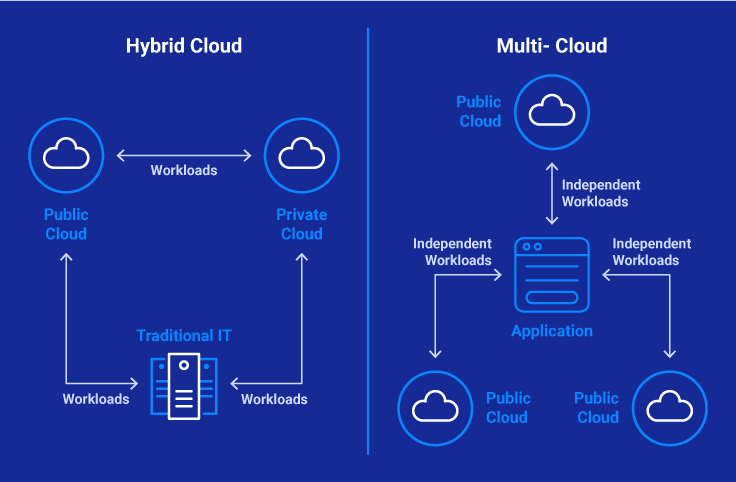
In the contemporary business landscape, the question is no longer if an organization should migrate to the cloud, but which cloud model delivers the optimal balance of control, flexibility, and innovation. For years, companies felt pressured to choose between the stark alternatives of a wholly public cloud or a fully private, on-premises infrastructure. This binary thinking has given way to a more nuanced and powerful paradigm: the Hybrid Cloud Strategy. A hybrid cloud is an integrated computing environment that combines a public cloud service (like AWS, Microsoft Azure, or Google Cloud) with a private cloud or on-premises data center, allowing data and applications to be shared between them. This architectural approach is not a compromise but a strategic masterpiece that enables businesses to select the ideal environment for each workload based on specific technical, compliance, and economic requirements. This comprehensive guide will explore the profound and multifaceted advantages of a hybrid cloud strategy, demonstrating how it serves as the foundational engine for digital transformation, operational resilience, and sustainable competitive advantage.
The hybrid model acknowledges that a one-size-fits-all approach to IT is obsolete. It provides the agility to leverage the vast scale and innovation of the public cloud for appropriate workloads while maintaining the security, performance, and control of a private environment for others. We will dissect the core benefits, from unparalleled flexibility and robust security to significant cost optimization, and provide a strategic framework for businesses to successfully architect and implement their own hybrid cloud future.
B. Deconstructing the Hybrid Cloud Architecture
To fully appreciate its advantages, one must first understand the core components and connectivity that constitute a hybrid cloud.
A. The Core Pillars of a Hybrid Environment
A true hybrid cloud is more than just having both public and private resources; it is their seamless integration.
-
Public Cloud Services: These are off-premises, scalable computing resources owned and operated by third-party providers. They offer a vast array of services, from basic compute and storage to advanced AI, machine learning, and IoT platforms.
-
Private Cloud / On-Premises Infrastructure: This is computing infrastructure dedicated to a single organization, offering maximum control and security. It can be a traditional virtualized data center or a modern, API-driven private cloud built with technologies like VMware or OpenStack.
-
On-Premises Legacy Systems: Many organizations have significant investments in legacy applications and hardware that cannot be easily moved to the cloud. A hybrid strategy incorporates these systems rather than abandoning them.
-
Edge Computing Locations: These are micro-data centers or computing resources located physically close to where data is generated (e.g., retail stores, factory floors), which are increasingly integrated into the hybrid model.
B. The Critical Role of Connectivity and Management
The “hybrid” magic happens through robust, secure connections and unified management tools.
-
Secure Networking: Dedicated, high-speed connections like AWS Direct Connect, Azure ExpressRoute, and Google Cloud Interconnect provide low-latency, reliable, and private links between on-premises infrastructure and the public cloud, bypassing the public internet.
-
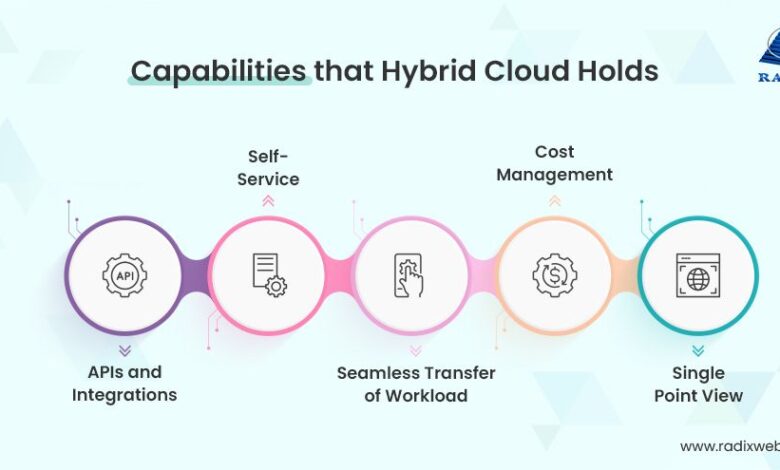
Unified Management Platforms: Tools like Microsoft Azure Arc, Google Anthos, and VMware Cloud on AWS are revolutionary. They allow administrators to manage, govern, and secure resources across on-premises, edge, and multi-cloud environments from a single, centralized control plane.

C. The Strategic Advantages of a Hybrid Cloud Approach
The hybrid model delivers a powerful combination of benefits that address the core challenges of modern business.
A. Unparalleled Workload Flexibility and Placement Optimization
This is the cornerstone advantage. A hybrid cloud empowers organizations to place each workload in the environment that makes the most sense.
-
Public Cloud for Dynamic, Scalable Workloads:
-
Web Applications and E-commerce: Perfect for handling unpredictable traffic spikes.
-
Big Data Analytics and AI/ML: Leverage the immense computing power and specialized services of public clouds for data processing and model training.
-
Development and Testing: Quickly spin up and tear down environments, accelerating innovation cycles.
-
-
Private Cloud for Sensitive, Stable, or Legacy Workloads:
-
Mission-Critical Applications: Legacy ERP or CRM systems that require specific hardware or low-latency access to on-premises data.
-
Highly Sensitive Data: Financial records, intellectual property, or personally identifiable information (PII) that must remain under direct control due to security policy or regulatory compliance.
-
Predictable, Consistent Workloads: Applications with steady resource demands where the cost of running them in the public cloud may be less economical over the long term.
-
B. Enhanced Security and Robust Regulatory Compliance
Contrary to the myth that cloud is inherently less secure, a hybrid strategy can create a more secure posture than a purely on-premises one.
-
Defense in Depth: Organizations can implement a layered security model. Highly sensitive data can be kept on-premises behind the corporate firewall, while still using the public cloud’s advanced, AI-powered security services (like threat intelligence and DDoS protection) for other parts of the application.
-
Data Sovereignty and Compliance: Regulations like GDPR, HIPAA, and various national data sovereignty laws often dictate where data can be stored and processed. A hybrid model allows companies to keep regulated data in a specific geographic location (on-premises or in a specific cloud region) while running the associated application logic in the public cloud.
-
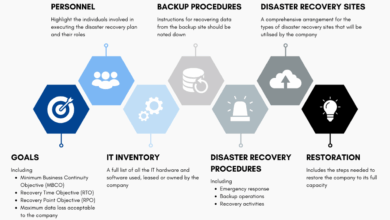
Disaster Recovery and Business Continuity: The public cloud serves as a perfect, geographically distant recovery site. Organizations can replicate critical data and applications from their private cloud to the public cloud, enabling rapid failover in the event of a local outage, natural disaster, or ransomware attack. This “cloud DR” is far more cost-effective and agile than maintaining a physical secondary data center.
C. Significant Cost Optimization and Financial Governance
A hybrid cloud enables a more nuanced and controlled approach to IT spending.
-
Elimination of Unnecessary Cloud Migration Costs: The “lift-and-shift” of every application to the public cloud can be prohibitively expensive due to egress fees and ongoing compute costs for stable workloads. A hybrid strategy prevents this financial pitfall by allowing suitable applications to remain on-premises.
-
Capital Expenditure (CapEx) vs. Operational Expenditure (OpEx) Balance: Companies can maintain their existing on-premises infrastructure as a capital asset (CapEx) while leveraging the public cloud for variable capacity as an operational expense (OpEx). This provides greater financial flexibility and predictability.
-
Prevention of Vendor Lock-In: By maintaining an on-premises option, organizations retain negotiating power with public cloud providers. They can easily move workloads back on-premises or to a different cloud if pricing becomes unfavorable, avoiding the “cloud trap” that many companies face.
D. Accelerated Business Agility and Digital Transformation
The hybrid model is a catalyst for innovation, allowing businesses to modernize at their own pace.
-
Bursting to the Cloud: During periods of high demand (e.g., seasonal sales, product launches), applications can “burst” from the private cloud to the public cloud to access additional compute capacity, ensuring performance and user experience without permanent over-provisioning.
-
Modernizing Applications Incrementally: Instead of a risky, all-or-nothing application rewrite, companies can adopt a “strangler fig” pattern. They can gradually decompose a monolithic legacy application, moving individual microservices to the public cloud while the core application remains on-premises, minimizing risk and allowing for iterative learning.
-
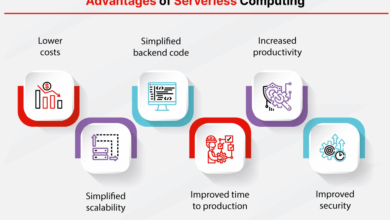
Access to Innovation: A hybrid strategy allows businesses to tap into the relentless pace of innovation in the public cloud—using services for AI, serverless computing, and IoT—without having to commit their entire IT estate.
D. Real-World Use Cases and Business Scenarios
The theoretical advantages of hybrid cloud are best understood through practical application.
A. The Financial Services Institution
-
Challenge: Strict regulations require customer account data to reside on-premises. However, the bank wants to use AI for real-time fraud detection, which requires massive computing power.
-
Hybrid Solution: Core banking systems and customer data remain in the secure, on-premises private cloud. The bank replicates transactional data to the public cloud where AI/ML models analyze it in real-time for fraudulent patterns. If fraud is suspected, an alert is sent back to the on-premises system to block the transaction.
B. The Global Manufacturing Company
-
Challenge: The company relies on legacy factory floor systems (SCADA) that cannot be moved. It needs to aggregate data from hundreds of factories for predictive maintenance and supply chain optimization.
-
Hybrid Solution: Each factory uses edge computing to collect and preprocess data. This data is then sent to the public cloud, where it is aggregated and analyzed on a global scale. Insights from the cloud (e.g., a part is likely to fail) are pushed back to the specific on-premises factory system for action.
C. The Healthcare Provider
-
Challenge: Patient health records (PHI) must be stored in a HIPAA-compliant environment, but medical researchers need to run large-scale genomic sequencing analysis.
-
Hybrid Solution: PHI is stored and managed in a highly secure, compliant private cloud or a dedicated HIPAA-aligned public cloud tenant. De-identified data is used for genomic research in the public cloud, leveraging its high-performance computing capabilities.
E. A Strategic Framework for Implementing a Hybrid Cloud
Adopting a hybrid model requires careful planning and execution.
A. Phase 1: Assessment and Strategy Formulation
-
Workload Discovery and Analysis: Catalog all applications and data. Analyze each for its technical dependencies, security requirements, compliance needs, and performance characteristics.
-
Placement Modeling: Decide, based on the analysis, which environment is optimal for each workload (Public, Private, Edge).
-
Total Cost of Ownership (TCO) Analysis: Model the financial implications of different placement scenarios over a 3-5 year horizon.
B. Phase 2: Architecture and Connectivity Design
-
Select Core Technologies: Choose the unified management platform (e.g., Azure Arc) and establish the secure network connectivity (e.g., ExpressRoute).
-
Design for Security and Identity: Implement a consistent identity and access management (IAM) strategy across environments and extend security policies from on-premises to the cloud.
-
Plan for Data Mobility: Architect how data will move securely and efficiently between environments, considering replication, synchronization, and latency.
C. Phase 3: Execution and Operationalization
-
Pilot Migration: Begin with a small, non-critical set of workloads to validate the architecture, connectivity, and processes.
-
Skill Development: Invest in training for IT teams to manage and operate in a hybrid environment, which requires knowledge of both traditional infrastructure and cloud-native technologies.
-
Implement Governance: Establish clear policies for cost management, security compliance, and operational procedures across the hybrid estate.
F. Conclusion: The Hybrid Cloud as a Strategic Business Enabler
The hybrid cloud is far more than a temporary transitional state; it is the enduring and dominant architecture for modern enterprise IT. Its power lies in its rejection of dogma and its embrace of pragmatic, business-centric solutions. By providing the flexibility to optimize workload placement, the robustness to meet stringent security and compliance mandates, and the financial intelligence to control costs, a hybrid strategy delivers a holistic value proposition that neither pure public nor pure private cloud can match.
For organizations navigating the complexities of digital transformation, the hybrid cloud is the ultimate enabler. It allows them to preserve past investments while fearlessly embracing future innovation, to maintain control where it matters most while gaining agility at the edges. In a world of constant change, the hybrid cloud provides the strategic resilience and operational dexterity that businesses need not just to survive, but to thrive. The journey requires careful planning, but the destination—a truly optimized, agile, and future-proof IT ecosystem—is well worth the effort.