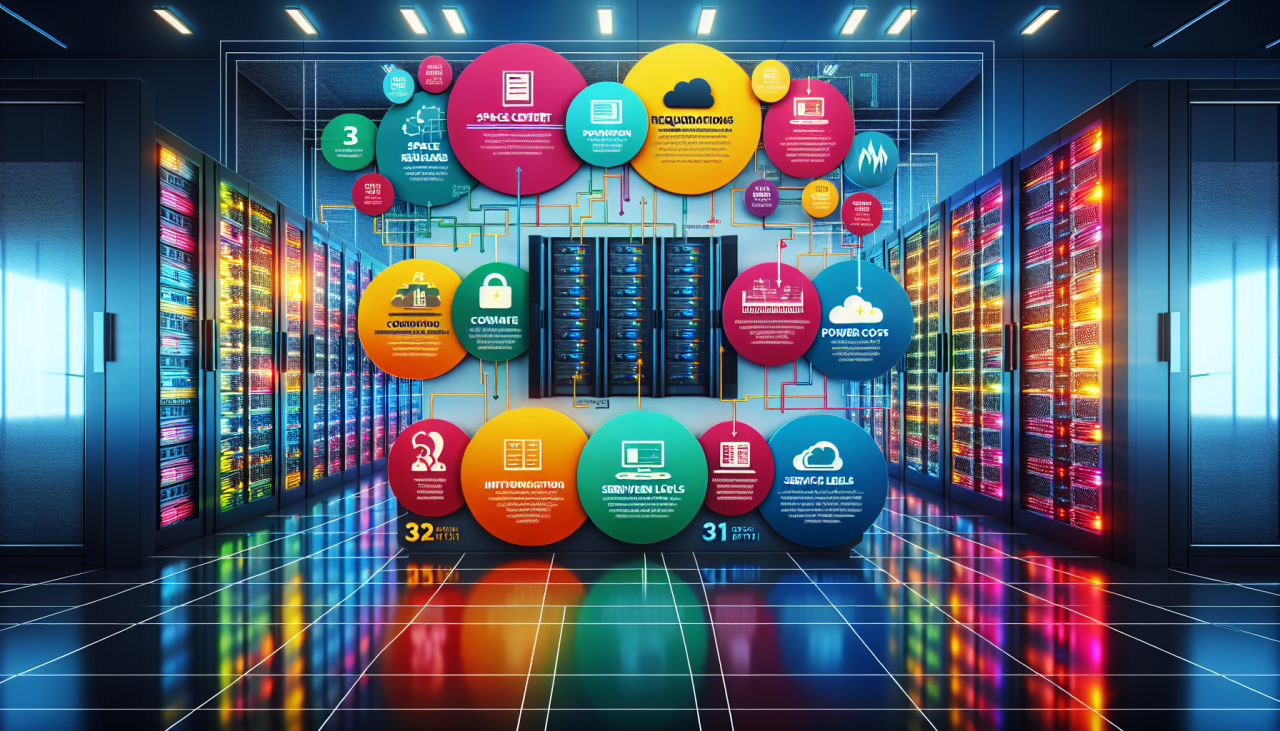
A. The Strategic Value of Colocation in a Cloud-First World
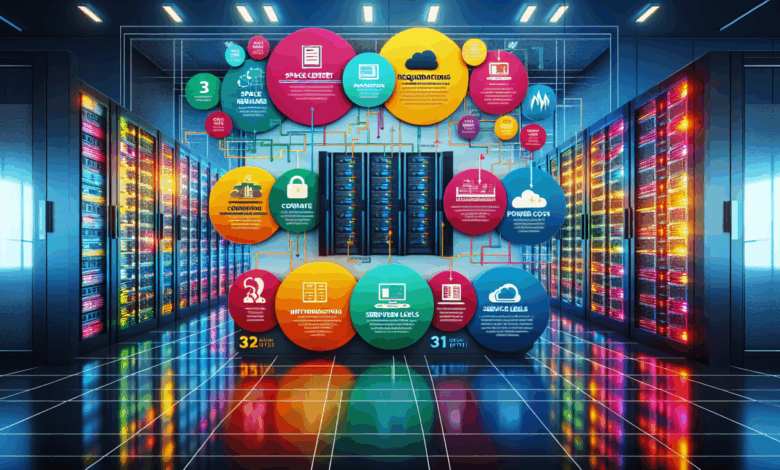
In an era dominated by cloud computing hype, the colocation market remains a robust, strategic, and often more cost-effective solution for businesses requiring physical control, custom hardware configurations, and predictable performance. Colocation, or “colo,” is the practice of renting space for your own servers and other computing hardware within a third-party data center facility. This model provides businesses with the benefits of enterprise-grade infrastructure—such as redundant power, robust cooling, and physical security—without the monumental capital expenditure of building their own data center. However, navigating the pricing landscape for colocation services can be complex and opaque. This definitive guide will demystify modern colocation pricing, breaking down the core cost components, exploring different pricing models, and providing a strategic framework for evaluating providers to ensure you secure a deal that delivers maximum value for your IT infrastructure investment.
The strategic relevance of colocation has only increased with the rise of hybrid cloud architectures. Companies are discovering that a one-size-fits-all cloud approach isn’t always optimal for legacy applications, data-heavy workloads, or specific compliance requirements. Colocation provides the foundational “home” for private infrastructure that can seamlessly connect to public cloud services, offering a best-of-both-worlds scenario. Understanding the cost structure is the first step in leveraging this powerful model.
B. Deconstructing Colocation: The Core Service Components
Before analyzing costs, it’s crucial to understand what you are actually paying for. A colocation provider offers more than just a closet for your servers; they provide a controlled, high-availability environment.
A. Physical Space and Housing
This is the most visible element of colocation. You are renting physical real estate within a secure data center.
-
Rack Units (U): The most common measurement. A “U” is a standard unit of measure (1.75 inches) designing the height of server equipment. You might rent 5U, 10U, a quarter rack, half rack, or a full cabinet.
-
Cages and Suites: For larger deployments with significant security or compliance needs, you can rent a dedicated caged area or even a private suite within the data center.
B. Power: The Lifeline of Your Infrastructure
Power is often the most significant and complex variable in colocation pricing. It’s not just about consumption; it’s about commitment and redundancy.
-
Power Capacity (Amps or kW): You commit to a specific power draw, typically measured in Amps (A) at a certain voltage (e.g., 120V/208V) or directly in kilowatts (kW). A higher power commitment costs more.
-
Utility Power vs. Billed Power: You are billed for the power capacity available to you (your commit), not necessarily the power you draw. Some providers may also charge a separate fee for the actual electricity consumed (utility pass-through).
-
Redundancy (N, N+1, 2N): The level of redundancy in the power path (from the grid to the UPS to the PDU) directly impacts cost. A fully redundant 2N system will be more expensive than a basic N configuration.
C. Cooling and Climate Control
The data center must remove the heat generated by your equipment. The cost of cooling is typically bundled into the space and power fees, as it is directly proportional to the power density of your rack.
D. Connectivity and Bandwidth
Your servers need to connect to the internet and other networks. Colocation facilities provide access to multiple carriers and internet service providers.
-
Cross-Connects: A physical, direct cable run from your cabinet to a specific carrier’s network within the data center. Each cross-connect usually incurs a one-time setup fee and a monthly recurring charge.
-
IP Transit: The service of providing your servers with a connection to the global internet. This is typically billed based on a committed data transfer rate (e.g., 1 Gbps) or, less commonly, on a per-gigabyte model.
E. Physical Security and Support
The fee includes 24/7 physical security measures like biometric scanners, video surveillance, and on-site security personnel, as well as remote hands support where data center staff can perform basic tasks on your behalf for a fee.
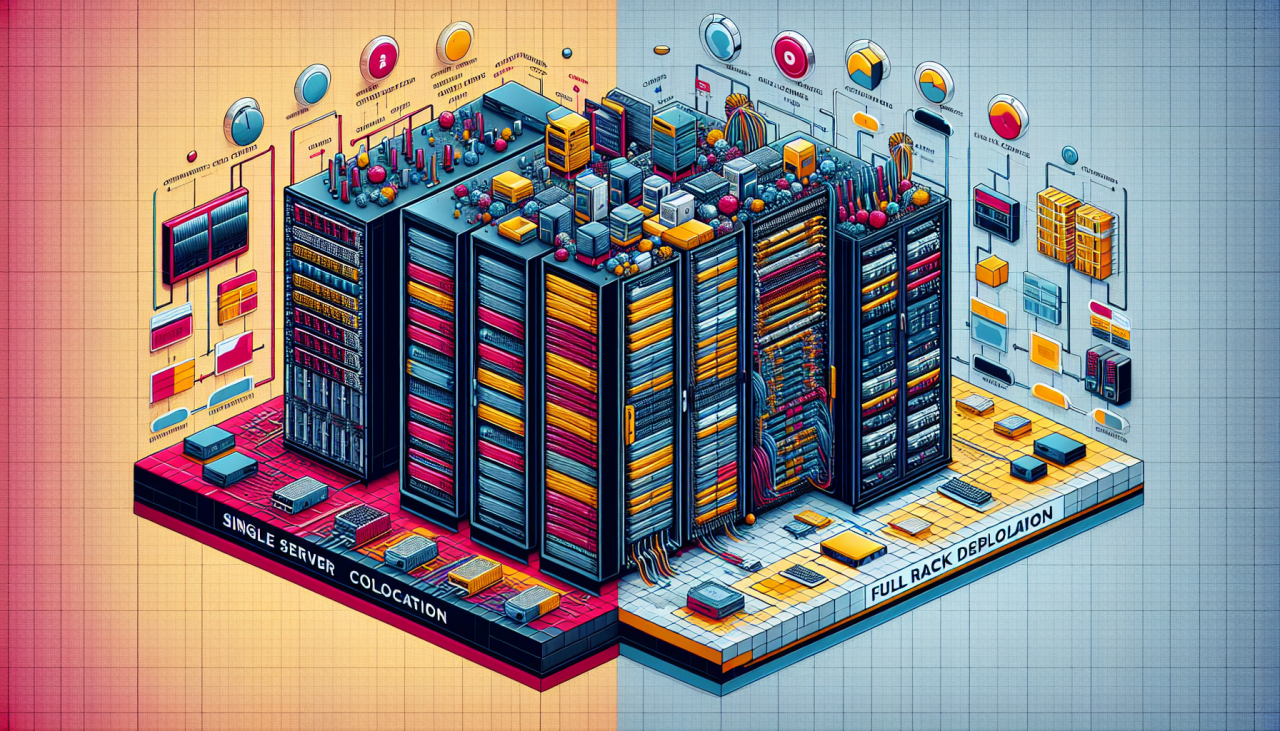
C. The Primary Colocation Pricing Models Explained
Providers structure their pricing in several common ways. Understanding these models is key to making an accurate comparison.
A. The Per-U Model
This is a simple, entry-level model where you pay a fixed monthly fee for each “U” of space, which often includes a standard amount of power (e.g., 1A per U) and a shared internet port.
-
Pros: Simple to understand, predictable for small deployments.
-
Cons: Can become expensive as you scale, and may not be cost-effective for high-density servers that draw more power than the standard allotment.
B. The Cabinet-Based Model
You rent an entire cabinet (typically 42U or 48U). Pricing is then based on the cabinet itself, with additional costs for power and bandwidth.
-
Pros: Provides full physical control and security over a cabinet. More flexible for mixing high and low-density equipment.
-
Cons: Requires enough equipment to fill, or at least justify, an entire cabinet.
C. The Power-Based Model (per kW)
This is increasingly the standard model, especially for modern, power-dense equipment. The primary cost driver is the amount of power (in kW) you commit to draw, with the physical space (the U’s) often included up to a full cabinet.
-
Pros: Aligns cost directly with the primary resource consumed (power). Highly flexible and fair for high-density deployments.
-
Cons: Requires accurate power planning. Under-committing can lead to overage fees, while over-committing means you’re paying for capacity you don’t use.
D. The All-Inclusive “Rack” Model
Common for quarter, half, and full cabinet offerings, this model bundles a set amount of space, power, and bandwidth into a single monthly price.
-
Pros: Extremely predictable budgeting; easy to compare between providers.
-
Cons: May include more or less of a resource than you actually need, potentially leading to inefficiency.
D. A Detailed Breakdown of Core Cost Components
Let’s delve deeper into the factors that will appear on your invoice.
A. Space-Related Costs
-
Recurring Space Fee: The monthly charge for the physical rack units or cabinet.
-
Power Density Surcharges: If your power draw per U exceeds the data center’s standard (e.g., over 1kW per U), you may incur a high-density surcharge due to the increased cooling requirement.
-
Remote Hands Fees: While not a direct colocation fee, this is a critical ancillary cost. Providers charge an hourly rate for tasks like rebooting a server, swapping a hard drive, or running a cable.
B. Power-Related Costs
-
Power Commitment Fee: The monthly fee for your reserved power capacity (e.g., $150 per kW).
-
Utility Overage Fees: If your actual power consumption exceeds your commit, you will be billed for the overage at a premium rate (e.g., $0.XX per kWh).
-
Power Redundancy Tier: A facility offering multiple tiers of power redundancy (N, N+1, 2N) will charge a premium for the higher tiers of availability.
C. Connectivity and Bandwidth Costs
-
Port Fee: A monthly fee for the network switch port that connects your cabinet to the data center’s network backbone.
-
95th Percentile Billing: A common billing method for bandwidth. The provider measures your bandwidth usage every 5 minutes, discards the top 5% of peaks (the outliers), and bills you based on the next highest peak. This encourages a consistent usage pattern rather than punishing for brief spikes.
-
Flat-Rate / Unmetered Bandwidth: A simpler model where you pay a fixed fee for a specific port speed (e.g., 1 Gbps unmetered), regardless of how much data you transfer.
-
Cross-Connect Fees: As mentioned, each direct connection to a carrier or cloud provider typically costs between $50 and $300 per month.

E. A Strategic Framework for Evaluating Colocation Providers
Choosing a colocation provider based on price alone is a dangerous approach. Value is derived from the total package.
A. Assess the Facility’s Tier and Reliability
The Uptime Institute’s Tier Certification (I-IV) provides a standardized benchmark for data center infrastructure, redundancy, and expected uptime. A Tier III facility (concurrently maintainable) will cost more than a Tier II but offers superior resilience.
B. Scrutinize the Service Level Agreement (SLA)
The SLA is your contractually guaranteed level of service. Pay close attention to:
-
Uptime Guarantee: Look for 100% guarantees on network and power, with clear financial penalties if they are not met.
-
Response Time Guarantees: For remote hands support, what is the guaranteed maximum response time?
C. Evaluate the Network Ecosystem
A rich ecosystem of available carriers, cloud on-ramps (like AWS Direct Connect and Azure ExpressRoute), and internet exchanges can provide better performance, lower latency, and more competitive pricing for your bandwidth needs.
D. Consider the Total Cost of Ownership (TCO)
The monthly fee is only one part of the TCO. You must also factor in:
-
The cost of your own hardware and its depreciation.
-
One-time setup and installation fees.
-
Any additional software licensing costs.
-
The internal staff time required to manage the hardware.
F. Colocation vs. The Cloud: A Cost-Benefit Analysis
Understanding when colocation is financially superior is key.
A. When Colocation is More Cost-Effective
-
Predictable, High-Performance Workloads: If you have a steady-state application that consumes significant resources 24/7, the predictable cost of colocation can be far lower than cloud compute bills.
-
Large Data Storage: Storing petabytes of data in the cloud can be prohibitively expensive. Housing your own storage arrays in a colocation facility is often the most economical choice.
-
Specific Hardware or Legacy Systems: Applications requiring specialized hardware (e.g., GPUs, high-performance storage) or that run on legacy operating systems are ideal for colocation.
B. When Cloud May Be Preferable
-
Unpredictable or Spiky Workloads: The cloud’s pay-as-you-go model excels here.
-
Global Deployment Needs: Needing to instantly deploy in a dozen global regions is a cloud-native strength.
-
Limited Capital and Technical Staff: Colocation requires upfront hardware investment and technical expertise, whereas the cloud offers a pure operational expense model.
G. Future-Proofing Your Colocation Strategy
The colocation industry is evolving. When making a decision, consider these forward-looking factors.
A. Scalability and Flexibility
Can you easily increase your power and space commitment without a costly and disruptive migration? Look for providers that offer flexible contracts and available capacity for growth within the same facility.
B. Sustainability and Power Usage Effectiveness (PUE)
A modern data center with a low PUE (closer to 1.0) is more energy-efficient, which can translate to lower utility pass-through costs and aligns with corporate sustainability goals.
C. Hybrid Cloud Readiness
The best colocation providers make it easy to connect your cabinet to major public clouds via low-latency, high-throughput private network connections, future-proofing your investment as part of a hybrid IT strategy.
H. Conclusion: Making an Informed Investment in Your Infrastructure
Colocation remains a powerful, strategic choice for businesses that require control, performance, and predictability from their IT infrastructure. Navigating its pricing landscape requires a nuanced understanding of not just the sticker price, but the underlying value of power, connectivity, and resilience. By deconstructing the cost components, understanding the various pricing models, and evaluating providers based on a comprehensive framework of reliability, ecosystem, and TCO, you can move beyond mere cost-per-U comparisons.
The decision to colocate is an investment in a stable, high-performance foundation for your digital operations. In a world of fluctuating cloud bills and shared tenancy, the dedicated, predictable nature of a well-planned colocation deployment can provide a significant competitive advantage, offering the control and cost-efficiency needed to power your most critical applications for years to come. The key is to approach the process not as a simple procurement exercise, but as forming a strategic partnership for your company’s digital future.